Poetry · England, 1631–1700 · Three poems
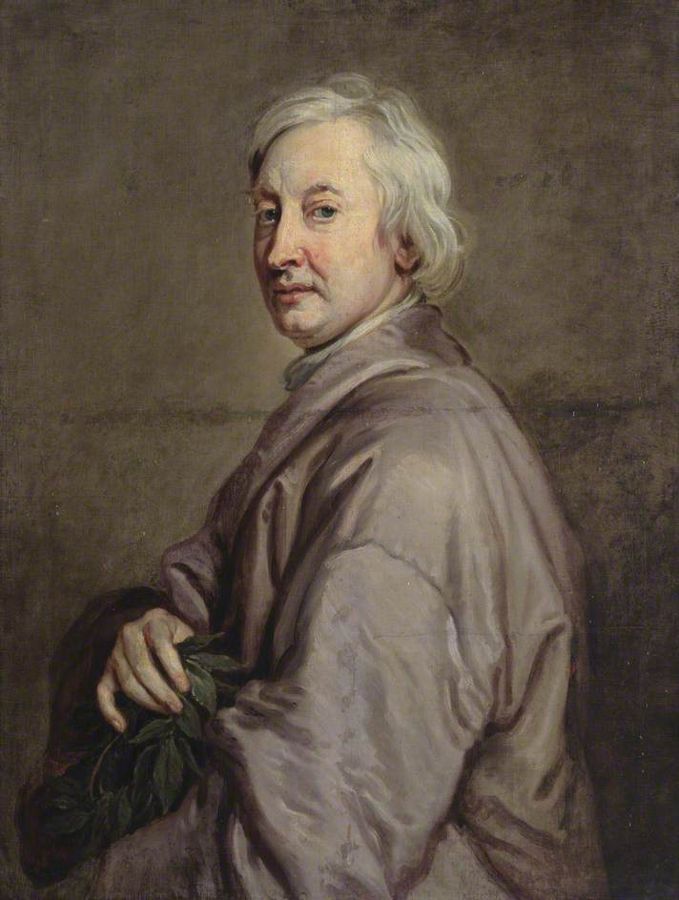
John Dryden: the insult in a crown
How do you insult someone without using a single rude word? Dryden did it by praising a rival poet in the grand language of kings and empires. Then the rival took his job.
What you will learn
- Identify a heroic couplet and explain how rhyme and rhythm shape meaning.
- Explain mock-heroic satire: insulting someone by praising them in grand language.
- Rewrite a couplet in modern English and compare the effect.
Who was John Dryden?
John Dryden (1631–1700) was the most important English writer of the Restoration: poet, playwright, critic and translator. He made the heroic couplet (two rhyming lines of iambic pentameter) the standard form for serious English poetry for the next hundred years.
| Year | Event |
|---|---|
| 1631 | Born in Northamptonshire |
| 1668 | Appointed Poet Laureate, the king's official poet |
| 1681 | Absalom and Achitophel, a political satire |
| 1682 | Mac Flecknoe published (written around 1676) |
| 1685 | Becomes a Catholic |
| 1687 | A Song for St. Cecilia's Day |
| 1689 | Loses the laureateship after the Glorious Revolution. Thomas Shadwell, the man he mocked in Mac Flecknoe, replaces him. |
| 1697 | Translation of Virgil's Aeneid |
| 1700 | Dies; buried in Westminster Abbey |
The heroic couplet
A heroic couplet is two lines that rhyme. Each line has ten syllables and five stresses: da-DUM da-DUM da-DUM da-DUM da-DUM. This rhythm is called iambic pentameter.
Read the first two lines of Mac Flecknoe aloud. Then tap the five syllables in each line that you say more strongly. Press Check when you have chosen five.
Text 1: Mac Flecknoe (1682), lines 1–20
Flecknoe, the old king of Nonsense, chooses Shadwell ("Sh——") as the heir to his throne because Shadwell is the dullest of all his sons.
Glosses: own'd = accepted as king · issue = children · succession = who inherits the throne · wit = intelligence, cleverness · deviates = wanders off course. The last line is the joke: Shadwell never makes sense, not even by accident.
Find the crown and the knife
Choose a colour, then tap words in the poem. Find every word that sounds royal or grand (gold), and every word that is really an insult (red). Tap a word again to clear it.
Mock-heroic is the name for this trick: the grand style of epic poetry, used for a small or ridiculous subject, to mock it.
Text 2: A Song for St. Cecilia's Day (1687), stanza 1
The same poet, now completely serious: music created the universe out of chaos. Notice that the lines are not all the same length.
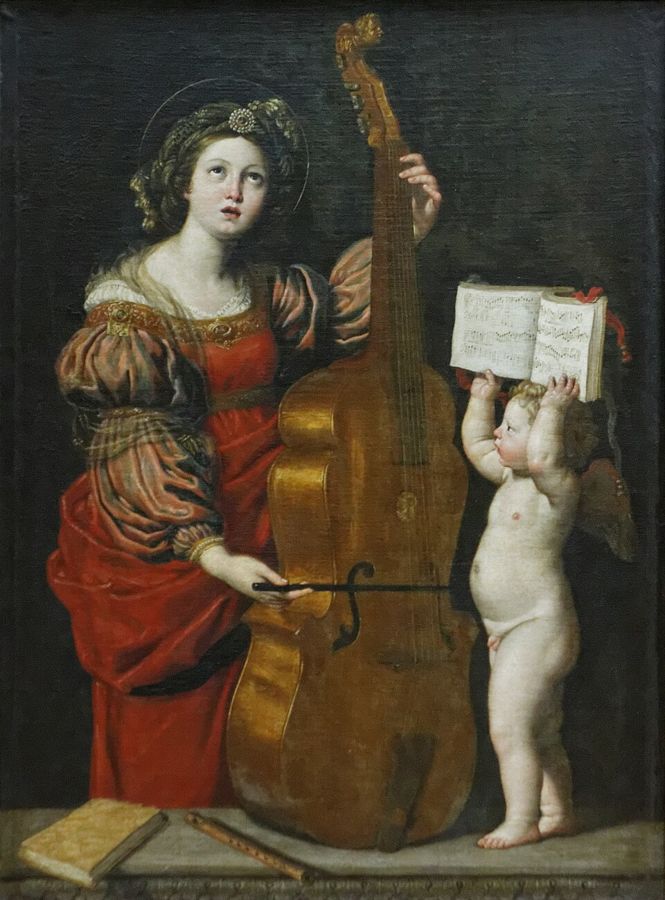
Glosses: universal frame = the structure of the universe · jarring = clashing · cold, hot, moist, dry = the four qualities behind the four classical elements · compass = full range · diapason = the whole musical scale; here, the final perfect chord. Man is the last and highest note of creation.
Text 3: Virgil's Aeneid, Book 1, lines 1–10
Dryden's translation, 1697. This is the real epic voice: the story of Aeneas, the Trojan hero whose family founded Rome.
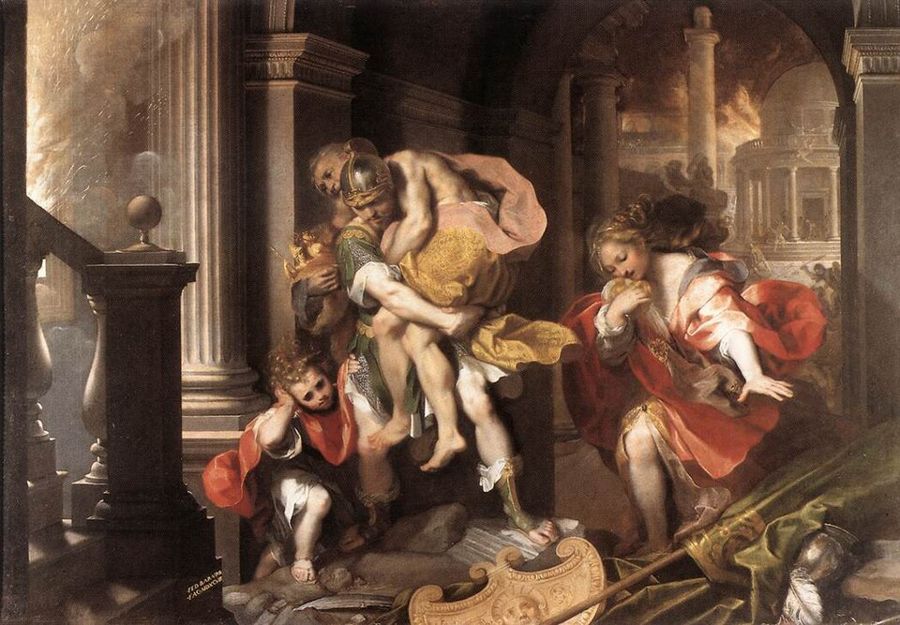
Glosses: haughty = proud · unrelenting = never stopping · Latian realm = Latium, the region around Rome · destin'd = fated · line = family descendants. Notice succession again: Text 1 borrows this epic vocabulary to mock Shadwell.
Rewrite a couplet
Choose one couplet (two lines) from Text 1. Rewrite it in plain, modern English. Then read both versions aloud.
Vocabulary
- heroic couplet
- two rhyming lines of iambic pentameter (10 syllables, 5 stresses)
- iambic pentameter
- da-DUM five times: "All HU-man THINGS are SUB-ject TO de-CAY"
- mock-heroic
- the grand, epic style used for a small or ridiculous subject, to mock it
- satire
- writing that attacks people or ideas through humour
- ode
- a formal, serious poem of praise, often with stanzas of different shapes
- epic
- a long poem about heroes and the founding of nations
Questions
Answer each question in two to four sentences.
Your mock-heroic poem
Write 4–6 mock-heroic couplets (8–12 lines) about something small and ordinary: a lazy cat, a broken phone, a slow bus. Use at least three grand words from Text 1 or Text 3. Lines must rhyme in pairs. Perfect iambic pentameter is not required.
- empire
- succession
- realm
- fate
- glories
- monarch
- reign
- majestic
- throne
- prince
- absolute
- immortal
- destined
- exiled
- labours
How it will be marked (10 points):
- 3 rhyme in pairs
- 4 grand vocabulary used for a small subject
- 3 grammar and spelling
Extension (optional). These are the first four lines of Dryden's Absalom and Achitophel (1681). It tells the Bible story of King David, but it is really about King Charles II, who had many children with women who were not his wife. Who or what is being satirised?
pious = religious · ere = before · priestcraft = the power of priests · polygamy = having more than one wife · confin'd = limited, locked in