History · Primary sources · 1642 to 2026
Romulus was the first American?
Why do American government buildings look like Greek temples? Why is there Latin on the dollar? Why did the men who wrote the Constitution sign their articles with a Roman name? Read the evidence in their own words, and decide how deep the roots go.
Start · October 2026A speech on the Pnyx
On 7 October 2026, the U.S. Secretary of State, Marco Rubio, gave a speech in Athens on the Pnyx, the hill where the citizens of ancient Athens met to vote. Behind him stood the Acropolis.
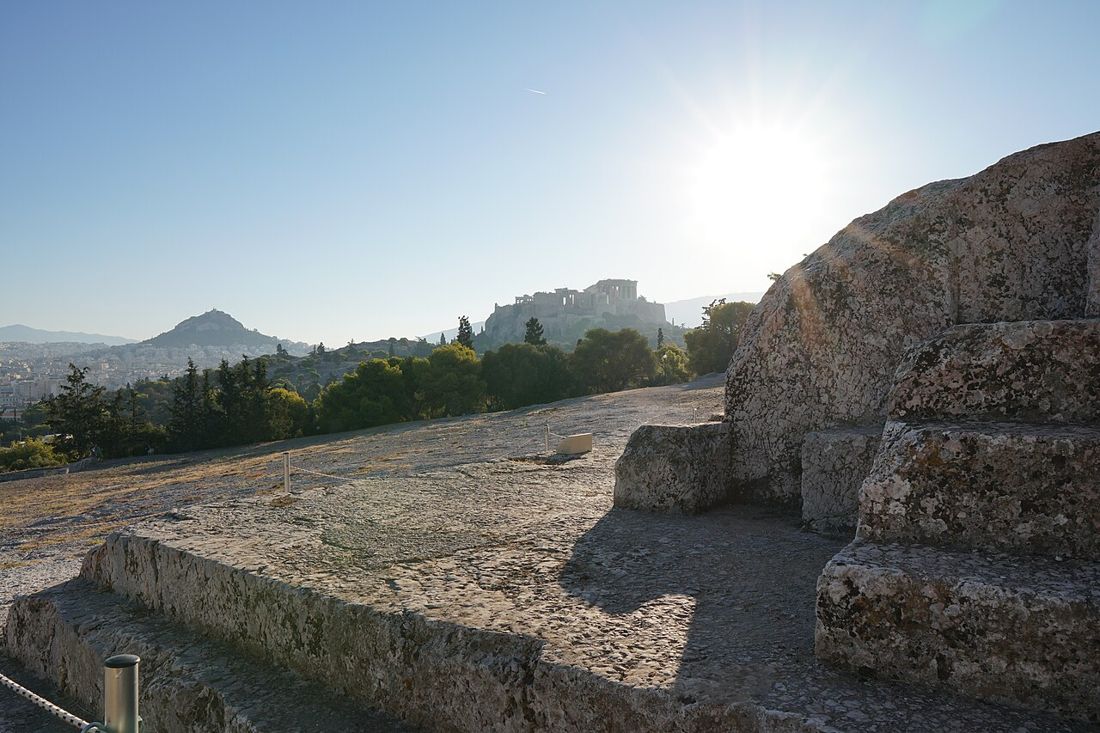
"The men who founded my country were fascinated by the heritage we inherited from yours."
"Greece is literally carved into the architecture of our government: in the towering columns, …"
"The thumos, as the ancient Greeks called it – the fire of passion, strength, courage, pride – …"
In a Breitbart News interview the same month he said: "We are the heirs, we inherited from Greece, from Rome, and ultimately through Europe, many of the values that today underpin our country."
heritage = what is passed down from the past · heirs = people who receive what others leave them · thumos = Greek: spirit, the fire in the chest · underpin = support from below
Not everyone agreed with the speech. The Associated Press reported that it contained some "historically dubious claims". Supporters praised it; one wrote that Americans "did not build this inheritance, yet we are its trustees". By the end of this lesson you will be able to judge the history for yourself.
Part 1Your own classics
China chose its government officials by examination. From the Song dynasty (960–1279) onward, these exams dominated education, and they dealt mainly with the Confucian classics. The system ended in 1905. To become a scholar-official, a young man had to know ancient texts by heart.
Europe and America had their own version of this. For the men who founded the United States, the "classics" meant the writers of ancient Greece and Rome, read in Greek and Latin. If you want to understand them, it helps to think of Cicero and Plutarch as their Confucius and Mencius.
Part 2The schoolroom
Spelling was not fixed in the 1600s and 1700s. You will see antient (ancient), feild (field) and Schollar (scholar). Read past them.
How to get into Harvard
"When any Schollar is able to Read Tully or such like classicall Latine Author ex tempore, and make and speake true Latin in verse and prose … and decline perfectly the paradigmes of Nounes and verbes in the Greeke tongue, then may hee bee admitted into the College, nor shall any claime admission before such qualifications."
Tully = Cicero, the Roman orator · ex tempore = at once, without preparing · decline = list all the forms of a noun · paradigmes = tables of word forms
A reading plan for a fifteen-year-old
"For the present I advise you to begin a course of antient history, reading every thing in the original and not in translations. First read Goldsmith's history of Greece. This will give you a digested view of that feild. Then take up antient history in the detail, reading the following books in the following order. Herodotus. Thucydides. Xenophontis hellenica. Xenophontis Anabasis. Quintus Curtius. Justin."
"In morality read Epictetus, Xenophontis memorabilia, Plato's Socratic dialogues, Cicero's philosophies."
in the original = in Greek or Latin, not in English · digested view = a short summary · morality = right and wrong
"I absolutely insist upon it"
"I absolutely insist upon it, that you begin upon Demosthenes, and Cicero. You may learn Greek from Demosthenes and Homer as well as from Isocrates and Lucian and Latin from Virgil and Cicero as well as Phaedrus and Nepos."
"If there is no other Way, I will take you home, and teach you Demosthenes and Homer myself."
John Quincy Adams was 13. He later became the sixth President of the United States.
Demosthenes = Greek orator · Cicero = Roman orator · Phaedrus, Nepos = easier Latin authors for beginners
Part 3Roman heroes as role models
Cincinnatus was a Roman farmer who was called to lead Rome in a war. When he had won, he gave up his power and went back to his plough. After the American Revolution, the army's officers formed a club in 1783 named after him, the Society of the Cincinnati, and George Washington was its first president. Washington himself gave up command of the army and went home to his farm. The city of Cincinnati, Ohio, is named after the Society.
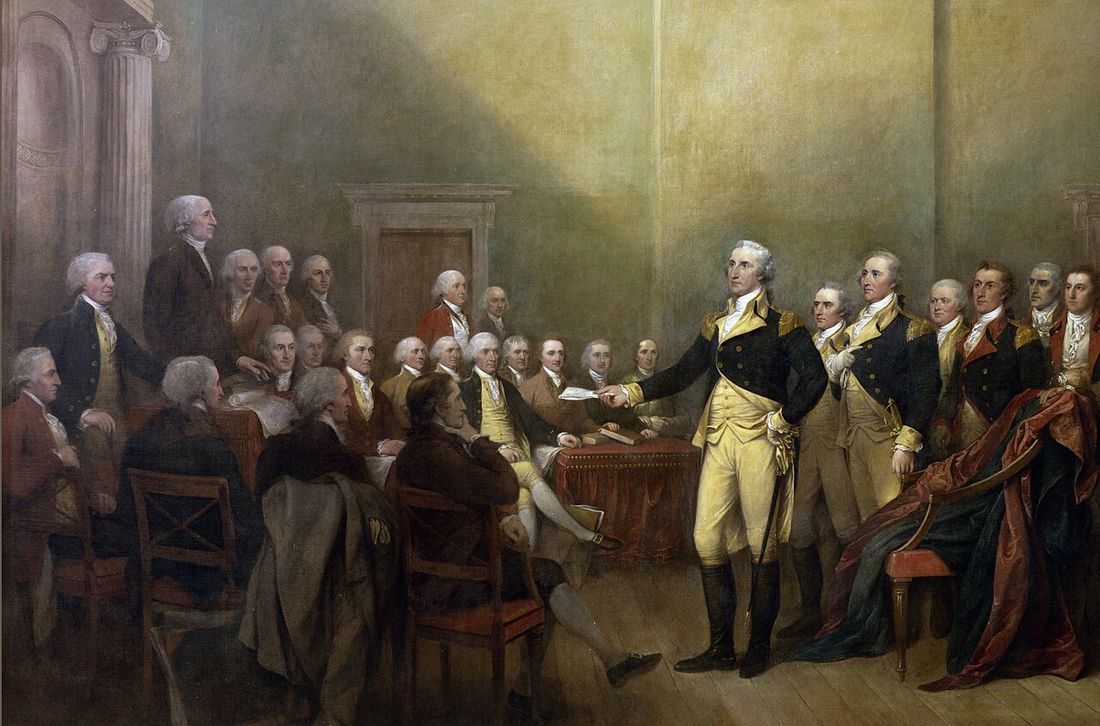
"The officers of the American Army, having generally been taken from the Citizens of America, possess high veneration for the character of that illustrious Roman, Lucius Quintius Cincinnatus, and being resolved to follow his example, by returning to their citizenship, they think they may, with propriety, denominate themselves the Society of the Cincinnati."
veneration = deep respect · illustrious = famous and admired · with propriety = correctly, properly · denominate themselves = call themselves
Cato the Younger was a Roman senator who chose death rather than live under Julius Caesar. In 1713 the English writer Joseph Addison made him the hero of a play, Cato. Washington loved it, quoted it often, and in 1778 had it performed for his soldiers at Valley Forge.
Find the borrowed line
"'Tis not in mortals to command success, / But we'll do more, Sempronius; we'll deserve it."
"It is not in the power of any man to command success, but you have done more—you have deserved it …"
mortals = human beings · command = order, control
Washington's letter, Founders Online · Cato at Valley Forge, Mount Vernon
Part 4A republic, not a democracy
In 1787–88, Alexander Hamilton, James Madison and John Jay wrote 85 newspaper essays to persuade New York to accept the new Constitution. Today we call them The Federalist Papers. They signed every one with the same name, Publius, after Publius Valerius Publicola, a founder and defender of the Roman Republic.
"The two great points of difference between a democracy and a republic are: first, the delegation of the government, in the latter, to a small number of citizens elected by the rest; secondly, the greater number of citizens, and greater sphere of country, over which the latter may be extended."
the latter = the second one (the republic) · delegation = giving a job to someone else · sphere = area
"… history informs us of no long-lived republic which had not a senate. Sparta, Rome, and Carthage are, in fact, the only states to whom that character can be applied. In each of the two first there was a senate for life."
long-lived = lasting a long time · that character = the description "long-lived republic"
Part 5Ideas in stone
A model for the Virginia Capitol
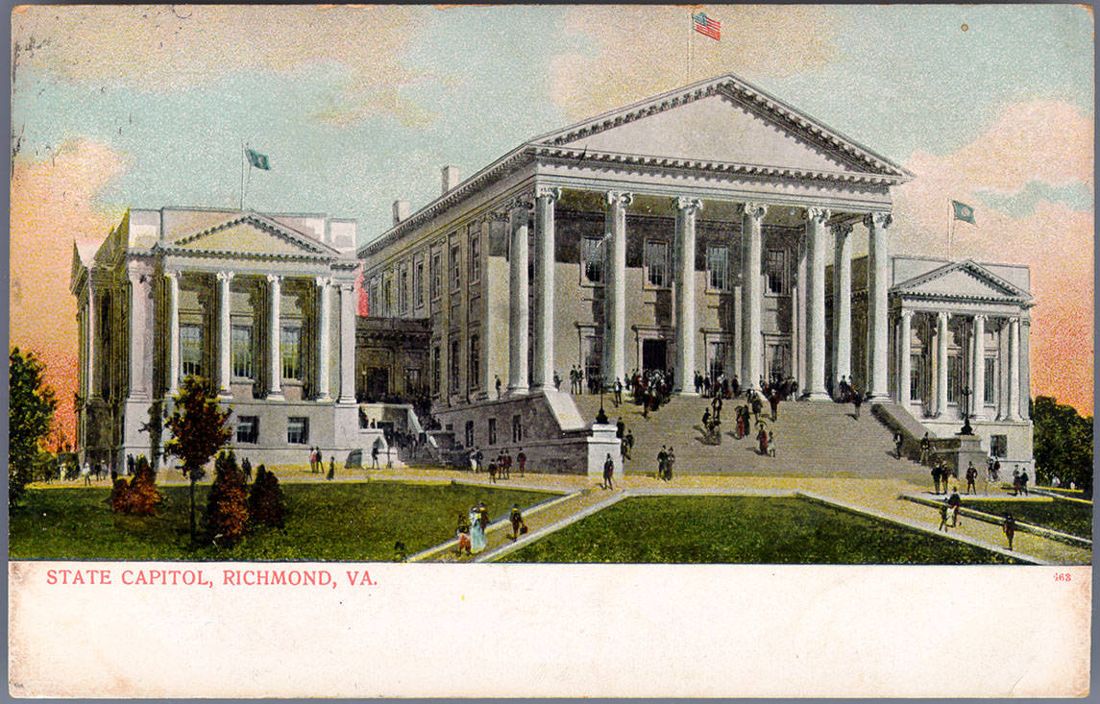
"We took for our model what is called the Maisonquarrée of Nismes, one of the most beautiful, if not the most beautiful & precious morcel of architecture left us by antiquity. … It is very simple, but it is noble beyond expression, and would have done honour to our country as presenting to travellers a morsel of taste in our infancy promising much for our maturer age."
The Maison Carrée is a Roman temple in Nîmes, in the south of France, built about 2,000 years ago. Jefferson used it as the model for the state Capitol of Virginia in Richmond.
morsel = a small piece · noble = grand and dignified · in our infancy = while our country is still a baby

"Here I am, Madam, gazing whole hours at the Maison quarrée, like a lover at his mistress. The stocking-weavers and silk spinners around it consider me as an hypochondriac Englishman, about to write with a pistol the last chapter of his history."
gazing = looking for a long time · hypochondriac = (here) gloomy, sad · write with a pistol the last chapter = kill himself (a joke)
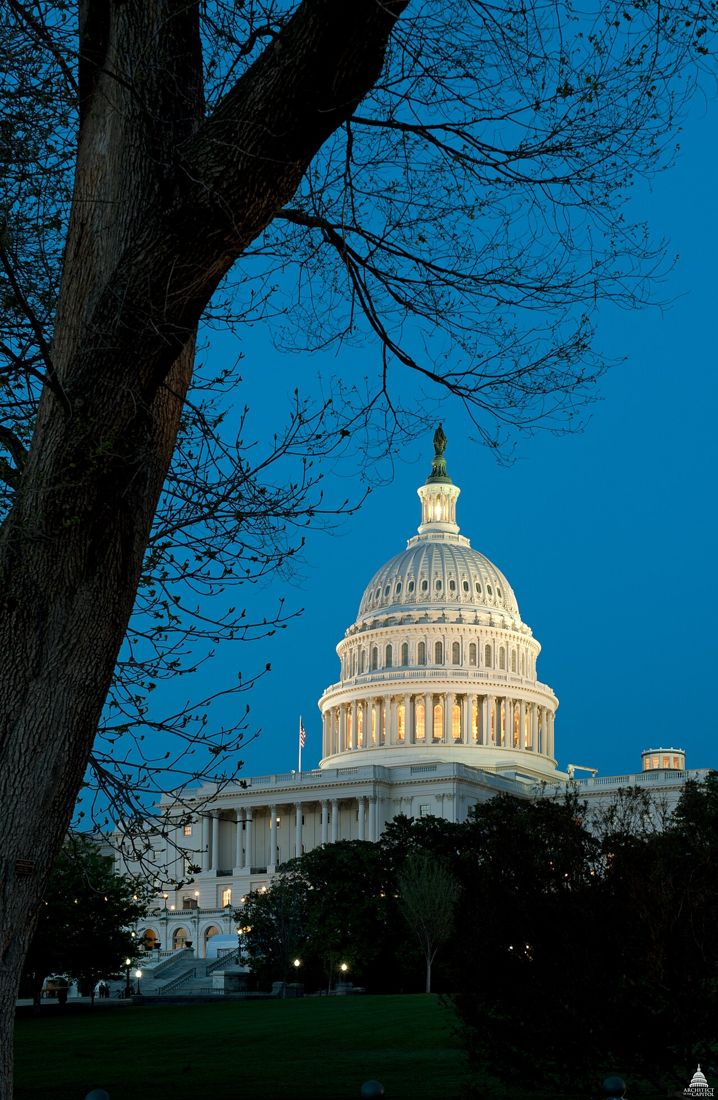
Capitol Hill. The leaders who planned Washington, D.C. "turned to the ancient Roman republic as a model". They renamed Jenkins Hill "Capitoline Hill", after the hill of the temple of Jupiter in Rome, and it was soon shortened to Capitol Hill. On the draft plans, Jefferson crossed out "Congress Hall" and wrote "Capitol". (U.S. Senate)
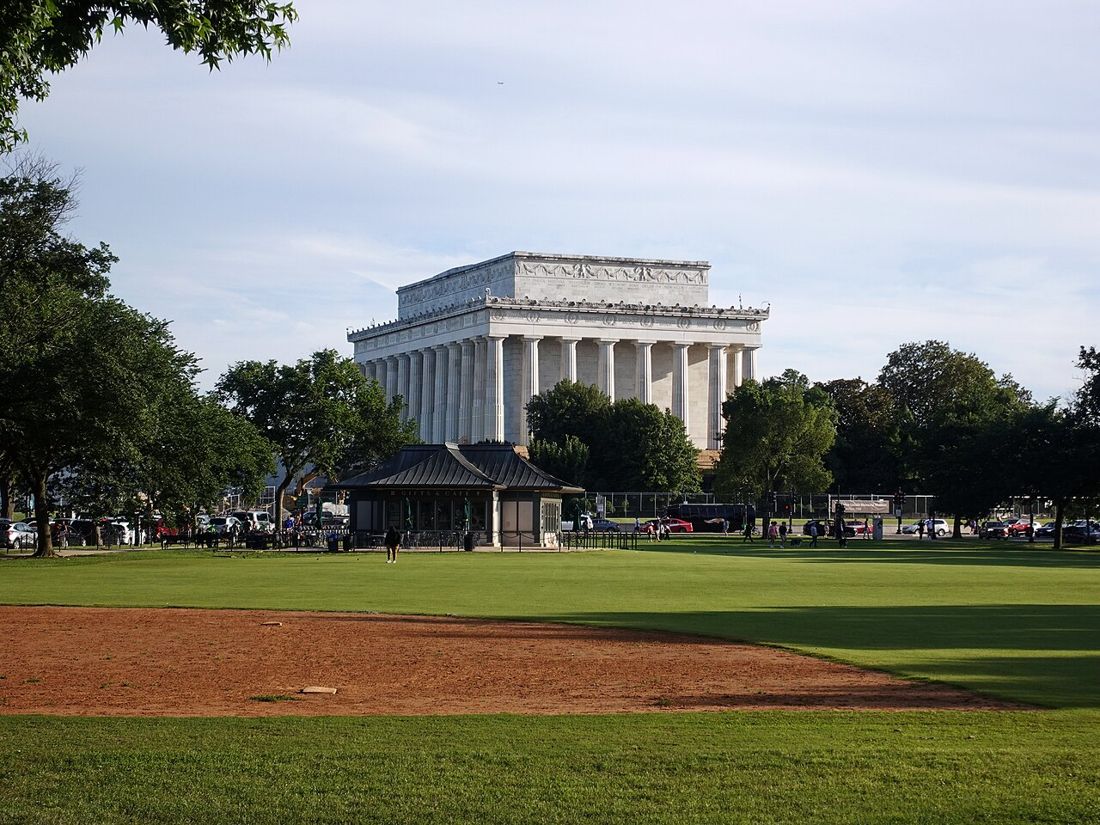
The Lincoln Memorial (1922). "Henry Bacon designed the memorial after the Greek Temple known as the Parthenon with the idea that a memorial to the man who defended democracy should be modeled after a structure from the birthplace of democracy." Its 36 Doric columns stand for the 36 states in the Union when Lincoln died. (National Park Service)
A bundle of rods
"In ancient times, fasces were a Roman symbol of power and authority, a bundle of wooden rods and an axe bound together by leather thongs."
At the Lincoln Memorial, the fasces appear again and again: on the walls, in the murals, and under Lincoln's hands on the arms of his chair. The Park Service explains that the fasces outside have thirteen rods, "suggesting the thirteen original states". Inside, the fasces have no axe: only the rods, bound together, a symbol of union. Two bronze fasces also stand beside the flag in the U.S. House of Representatives.
In 1922, the year the Lincoln Memorial opened, Benito Mussolini came to power in Italy. His movement took its name, fascism, from the same Roman symbol, but used it for "the power and brutality also inherent in the fasces' meaning".
authority = the right to give orders · bound = tied · thongs = leather straps · inherent = part of the nature of something
National Park Service: Secret Symbol of the Lincoln Memorial · Architect of the Capitol: House Chamber
Part 6Latin on the money
Look at the back of a U.S. one-dollar bill. The Great Seal of the United States carries three Latin mottoes. Guess what each one means, then press Enter to check.
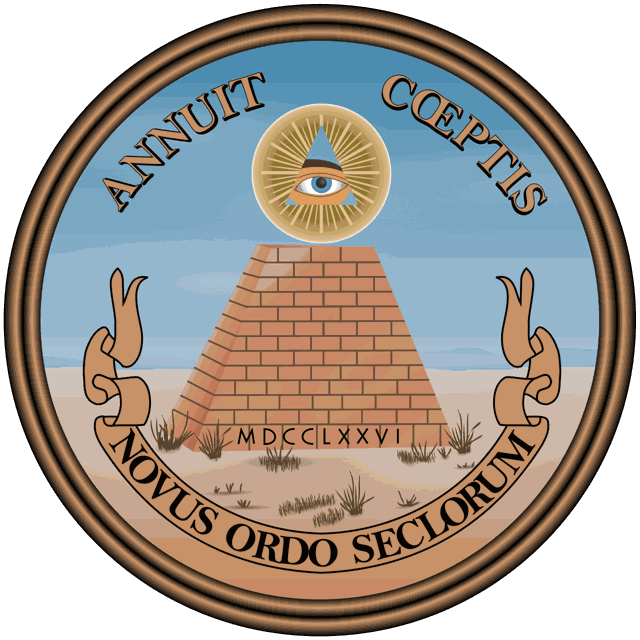
Translations from the U.S. Department of State's history of the Great Seal (PDF). The seal's designer, Charles Thomson, wrote in 1782 that the date under the pyramid marks "the beginning of the new American Æra".
Charles Thomson knew Latin well. Read these two lines by the Roman poet Virgil and compare them with the mottoes above.
"da facilem cursum, atque audacibus adnue coeptis"
give me an easy journey, and favour my bold undertaking
"magnus ab integro saeclorum nascitur ordo"
the great order of the ages is born anew
Part 7Your essay
Check the claim. In his Athens speech, Rubio said that "the most commonly cited author in the Federalist Papers was Plutarch, the Greek biographer". Search the text of the Federalist Papers (the Avalon Project has all 85). How many times can you find Plutarch named? Which other ancient names do you find?
Vocabulary
- heritage
- traditions and ideas passed down from the past
- heir
- a person who receives what someone else leaves behind
- republic
- a state ruled by elected representatives, not a king
- delegate
- to give a task or power to someone else
- senate
- a council of senior lawmakers (from Latin senex, old man)
- pseudonym
- a false name used by a writer
- antiquity
- the ancient past, especially of Greece and Rome
- motto
- a short phrase that states a belief or aim
- virtue
- moral goodness; for Romans, courage and duty to the state
- role model
- a person others copy because they admire them