The dead answer back
Every speech so far has made a promise about the dead: they will be remembered, they will be blessed, their graves will be “for ever England.” But nobody asked the dead. This part shows two artists who did: a French film-maker and an English poet, both of whom had seen the front.
J’accuse, 1919
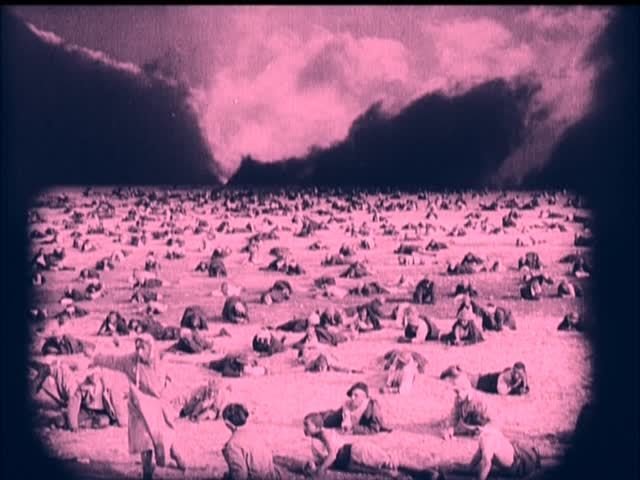
filmed between August 1918 and March 1919, while the war was ending. It opened in France in April 1919 and was a great success. The story follows two men who love the same woman: her husband François, a hunter, and Jean Diaz, a poet. Both go to the front. François is killed. Jean survives, but his mind is broken by the war.
In the last part of the film, Jean calls the people of his village together and tells them a vision. The dead of the battlefield rise from their graves and march home, to see whether the living have been worthy of their sacrifice. The poet no longer writes the speech that sends men to die. He calls the dead back to judge the living.
Gance used real soldiers to play the dead: about 2,000 men , many from the front. Gance later said that within weeks of returning to the front, 80 per cent of them had been killed. Historians have not confirmed that figure, and the war ended in November 1918, so treat it as Gance’s claim. The one-armed poet is one of the dead.
Wilfred Owen, “Dulce et Decorum Est”
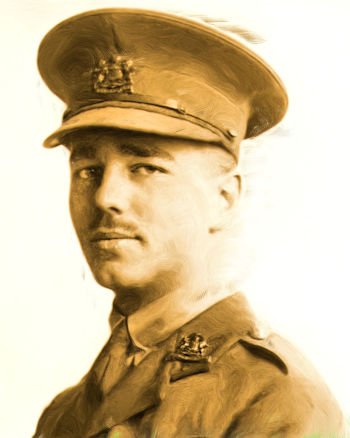
Owen was an officer in the British Army. He wrote this poem in 1917–18 after months in the trenches. One early draft was addressed to Jessie Pope, the writer of “Who’s for the Game?” in Part 2. Owen was killed in France on 4 November 1918, one week before the war ended. The poem was published in 1920.
The title and last lines quote the Roman poet Horace: , “It is sweet and fitting to die for one’s country.” That line is the oldest speech of all.
dotted = word · solid = reference
Bent double, like old beggars under sacks, Knock-kneed, coughing like hags, we cursed through , Till on the haunting we turned our backs And towards our distant rest began to trudge. Men marched asleep. Many had lost their boots But limped on, . All went lame; all blind; Drunk with fatigue; deaf even to the Of dropping softly behind.
GAS! GAS! Quick, boys!—, Fitting the clumsy helmets just in time. But someone still was yelling out and stumbling And flound’ring like a man in fire or .— Dim through the and thick green light, As under a green sea, I saw him drowning.
In all my dreams before my helpless sight, He plunges at me, , choking, drowning.
If in some smothering dreams, you too could pace Behind the wagon that we flung him in, And watch the white eyes in his face, His hanging face, like a devil’s sick of sin; If you could hear, at every jolt, the blood Come gargling from the froth-corrupted lungs, Obscene as cancer, bitter as the Of vile, incurable sores on innocent tongues,— My friend, you would not tell with such high To children for some desperate glory, The old Lie: Dulce et decorum est Pro patria mori.
Study questions
Your answers save in this browser. Quote line numbers from Owen.