The recruiters
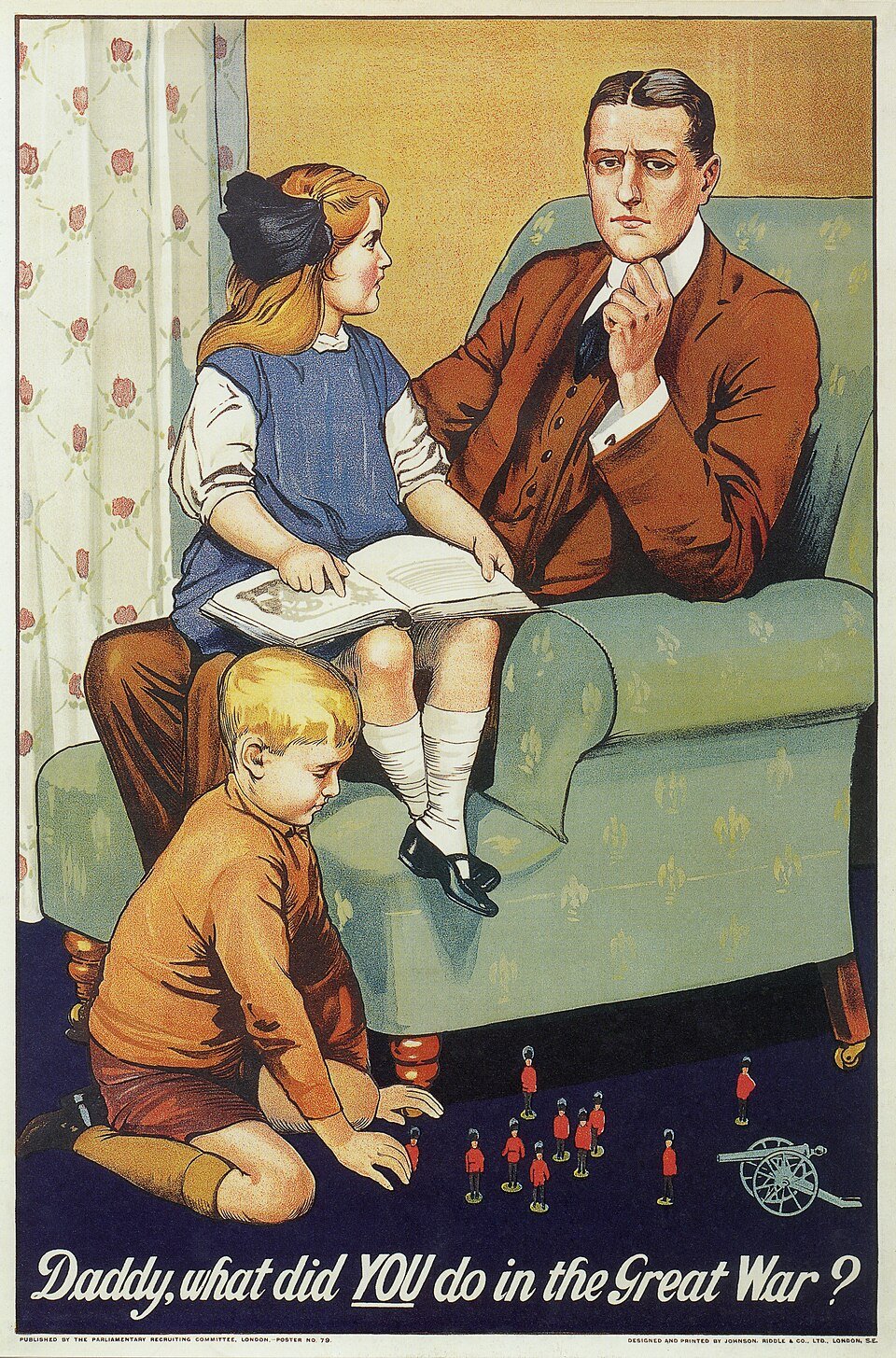
When Britain went to war with Germany in August 1914, it had no . Every soldier had to choose to go. By the end of 1915 about 2.5 million men had volunteered. Posters, newspapers, speeches in town squares, and poems all worked to them.
The reason given in 1914 was that Germany had invaded neutral Belgium, and Britain had promised to defend it. That is a real reason. But look at the two poems below and ask: how much of that reason is in them?
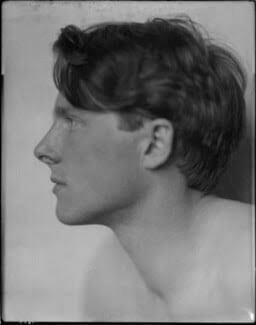
Rupert Brooke, “The Soldier”
Brooke wrote this sonnet at the end of 1914. On Easter Sunday 1915 it was read aloud from the pulpit of in London. Three weeks later Brooke was dead, not from a bullet, but from an infection, on a hospital ship in the Aegean Sea. He became the symbol of the young volunteer.
dotted = word · solid = reference
If I should die, think only this of me: That there’s That is for ever England. There shall be In that rich earth concealed; A dust whom England , shaped, made aware, Gave, once, her flowers to love, her ways to roam, A body of England’s, breathing English air, Washed by the rivers, by suns of home.
And think, this heart, all evil away, , no less Gives somewhere back the thoughts by England given; Her sights and sounds; dreams happy as her day; And laughter, learnt of friends; and gentleness, In hearts at peace, under an English heaven.
Jessie Pope, “Who’s for the Game?”
wrote light, cheerful verse for newspapers and magazines. Her war poems appeared in the Daily Mail, one of the most widely read papers in Britain. This one turns the war into a sports match, the way an English schoolboy would understand it: rugby, cricket, a race.
Who’s for the game, the biggest that’s played, The of a fight? Who’ll grip and the job unafraid? And who thinks he’d rather ? Who’ll for the signal to ‘Go!’? Who’ll give his country a hand? Who wants a turn to himself in the show? And who wants ?
Who knows – not much – Yet eagerly shoulders a gun? Who would much rather come back with a Than and be out of the fun?
Come along, lads – But you’ll come on all right – For there’s only one course to pursue, Your country is in a fight, And she’s looking and calling for you.
Study questions
Your answers save in this browser. Quote line numbers.