Two defectors, one mirror
When a KGB officer runs to the West, the first question is simple: is he real, or is he a , sent to feed us ? Between 1961 and 1964, two KGB officers came over. Each one’s story made the other look false. Angleton had to choose which mirror to believe.
Anatoliy Golitsyn
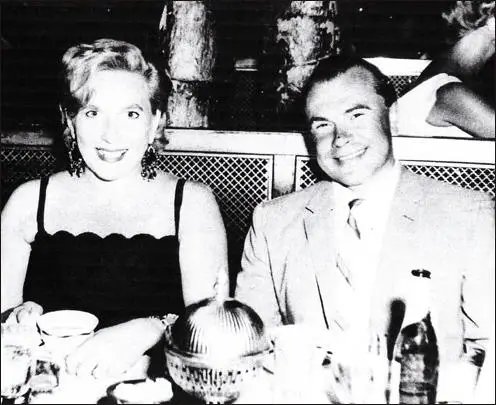
A KGB major. In December 1961 he walked into the CIA station in Helsinki, Finland, and asked for asylum.
He said the KGB had inside Western intelligence services, and that Moscow was running a long‑term deception against the West. Above all, he warned: the KGB will send false defectors after me, to make you doubt what I say.
Angleton believed him and gave him rare access to CIA files.
Yuri Nosenko
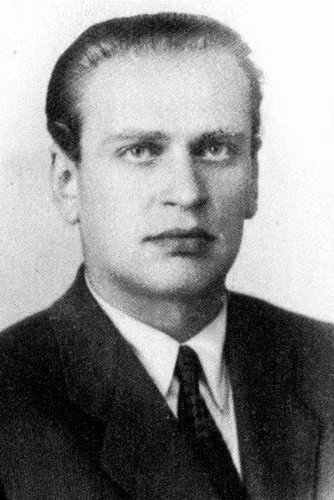
A KGB officer. He first contacted the CIA in Geneva in 1962, then defected there in February 1964, ten weeks after President Kennedy was killed.
He said Golitsyn was exaggerating, that there was no great Soviet plot, and that the KGB had never been interested in Lee Harvey Oswald, Kennedy’s killer, who had lived in the Soviet Union.
To believe Nosenko, the CIA had to stop believing Golitsyn.
Golitsyn’s warning is the trap. If a new defector agrees with him, Golitsyn is confirmed. If a new defector disagrees with him, that is exactly what Golitsyn predicted a fake would do, so Golitsyn is confirmed again. No evidence can prove him wrong. That is what a wilderness of mirrors looks like from the inside.
You are the case officer
Below are six things the CIA learned about Nosenko. For each one, decide: genuine defector or KGB plant? Choose before you read what happened next. Your choices are sent with your answers.
What the CIA did
CIA officers who doubted Nosenko held him in isolation from April 1964: first in an attic room in a safe house in Maryland, then, from August 1965, in a windowless concrete cell built for him at a CIA training base in Virginia. He had no books and almost no human contact, and was interrogated and polygraphed again and again. He was confined for about three years in total. How much Angleton himself directed this is still disputed; the case was run by the CIA’s Soviet division, but Angleton’s belief in Golitsyn shaped it.
In 1968 a new CIA review, with a new polygraph test, concluded that Nosenko was . He was released in 1969, paid compensation, became an American citizen and worked as a CIA consultant. In 1978 the CIA’s own director called his treatment excessive. His old handler still believed, until his death, that Nosenko had been a plant.
Meanwhile Golitsyn’s leads drove a long hunt for a mole inside the CIA itself, code‑named in its joint form with the FBI. Loyal officers fell under suspicion and some careers were destroyed. Critics later called Angleton’s grand theory the . A CIA historian, writing in 2009, judged that from about 1959–63 Angleton lost his sense of proportion, and that the mole hunt that followed did more harm than good.
Knowing, or being?
There are two different questions hiding here. The first: how can we know if Nosenko is real? That is a question of . The second is stranger: what does it mean for a defector to be “real” at all? A man can lie about his rank, invent a telegram, and still be a genuine defector. A man can tell the truth about every fact and still be a plant. If “real” cannot be found in any single fact, where is it? That is a question of , and it is the question Gerontion’s last line raises too: were the strangers in the dark rooms ever there, or only “thoughts of a dry brain”?
Study questions
Your answers save in this browser. After you write an answer, you can compare it with a sample answer.