Classic English The People and the Enemy

Link 2 · 2011

Occupy Wall Street

For two months, a park in New York became a small society with no leader and no list of demands.

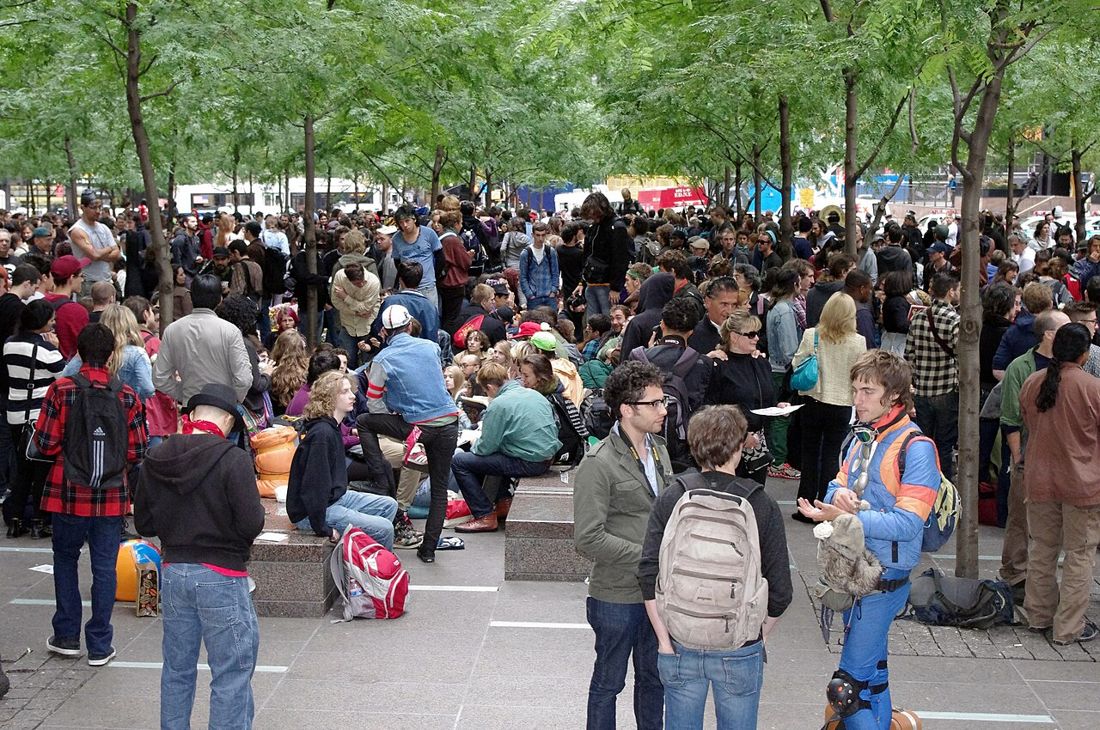
A crowd of protesters stands and sits under the trees of a city plaza
Protesters fill Zuccotti Park on the first day of Occupy Wall Street, 17 September 2011 · David Shankbone, CC BY 3.0
  1. 2015–2017Modern populism
  2. 2011Occupy Wall Street
  3. 1983Laibach
  4. 1848 · 1920Communism and National Socialism
  5. 1848–2017Closing the loop

Key idea

A movement that refused to make demands. In September 2011, protesters camped in Zuccotti Park, near Wall Street in New York, for two months. They listed what was wrong, but would not say what they wanted done about it.

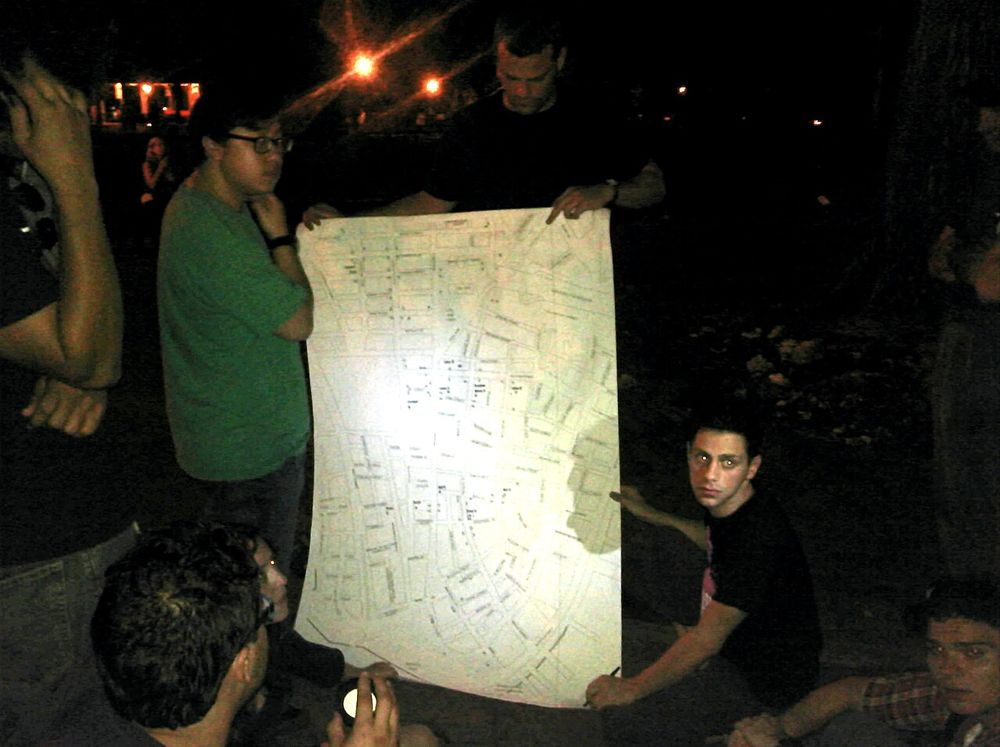
At night in a park, a group of young people hold up and study a large hand-drawn street map
Occupy Wall Street protesters plan at night, New York, 2011 · David Shankbone, CC BY 3.0

Occupy made one phrase famous: "We are the 99%." The other 1% were the richest people in the country.

Primary sources

Declaration of the Occupation of New York City

Accepted by the New York City General Assembly, 29 September 2011

"As one people, united, we acknowledge the reality…"

Then comes a list of more than twenty grievances. Every line begins with the same two words: "They have…"

Read the full Declaration (NYU Special Collections) →

Slavoj Žižek, speech to the protesters

Zuccotti Park, New York, October 2011 · Slovenian philosopher

"Don't fall in love with yourselves. We have a nice time here."

Žižek supported the protesters, but warned them that a happy camp is not the same as change.

Read part of the speech (P2P Foundation) →

Marisa Holmes, Organizing Occupy Wall Street: This Is Just Practice

2023 · Holmes was an Occupy organizer from the first day

"There was a common enemy, and it was right there in front of us…"

She means Wall Street. She also argues that the Bernie Sanders campaign took the movement's language and used it for an election. This is called co-opting.

Read the book excerpt (Commons Library) →
Clip: Slavoj Žižek speaks at Zuccotti Park, October 2011, parts 1 and 2 (Open Culture)

The process was the message

Occupy did not only protest. It ran itself. Decisions were made in a General Assembly: an open meeting in the park where anyone could speak and the group tried to agree before acting. Holmes writes that the assembly called itself "an open, participatory, and horizontally organized process." Horizontal means no boss at the top.

The police did not allow microphones. So the crowd used the people's mic: the speaker said a few words, and everyone nearby repeated them loudly so people at the back could hear. You can hear it in the Žižek clip.

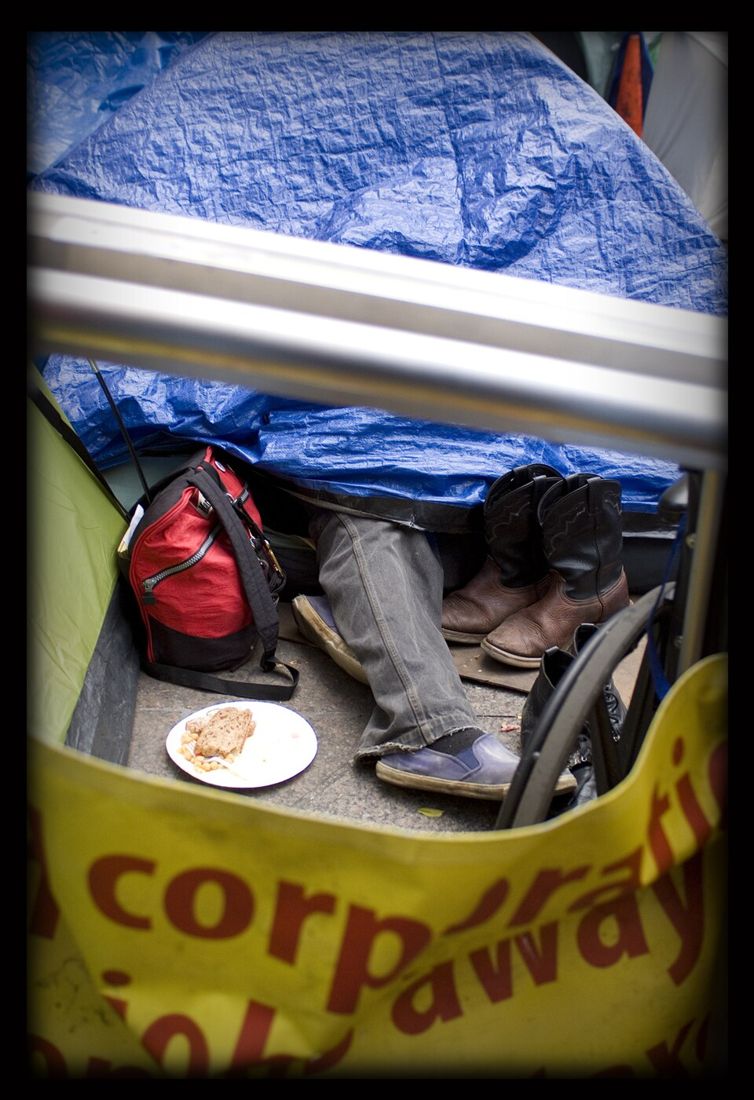
Under a blue tarp, protesters' legs and boots, a backpack and a plate of food, behind a yellow protest banner
Inside the camp in Zuccotti Park, two months in, 11 November 2011 · Debra M. Gaines, CC BY 3.0

Holmes remembers a chant from the camp: "This. Is. Just. Practice." The camp was practice for a different way of living together.

Why no demands?

A demand asks the people in power to change something. That means it accepts that they have the power to decide.

One way to read Occupy: by refusing to send demands, the camp refused the system's rules for change. Its answer to the question "What do you want?" was the camp itself: the assembly, the people's mic, the shared food. The message was shown, not declared.
Clip: Slavoj Žižek on the message of Occupy Wall Street, 2:19–2:44 (YouTube)

Questions

Occupy's message was in what it did, not what it said. Žižek had seen that before, in a band from his own country that refused to say what it believed.