Link 4 · 1848 and 1920
Communism and National Socialism
Two of the most powerful ideas of the last two centuries. Both spoke for "the people". Both named an enemy.
- 2015–2017Modern populism
- 2011Occupy Wall Street
- 1983Laibach
- 1848 · 1920Communism and National Socialism
- 1848–2017Closing the loop
Key idea
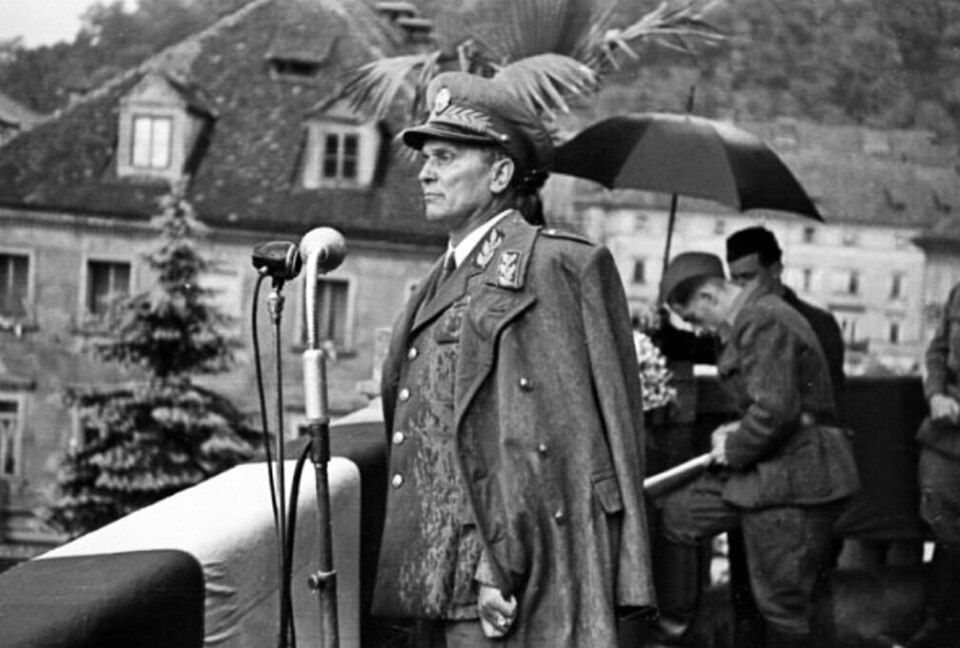
"The people" against a named enemy. Both movements said they spoke for the people. Both named an enemy. Both used rallies, uniforms and ritual.
In 1941, Slovenia was divided between Nazi Germany, Fascist Italy and Hungary. From 1945 it was part of communist Yugoslavia. For Laibach's parents and grandparents, both systems were real life.
Primary sources
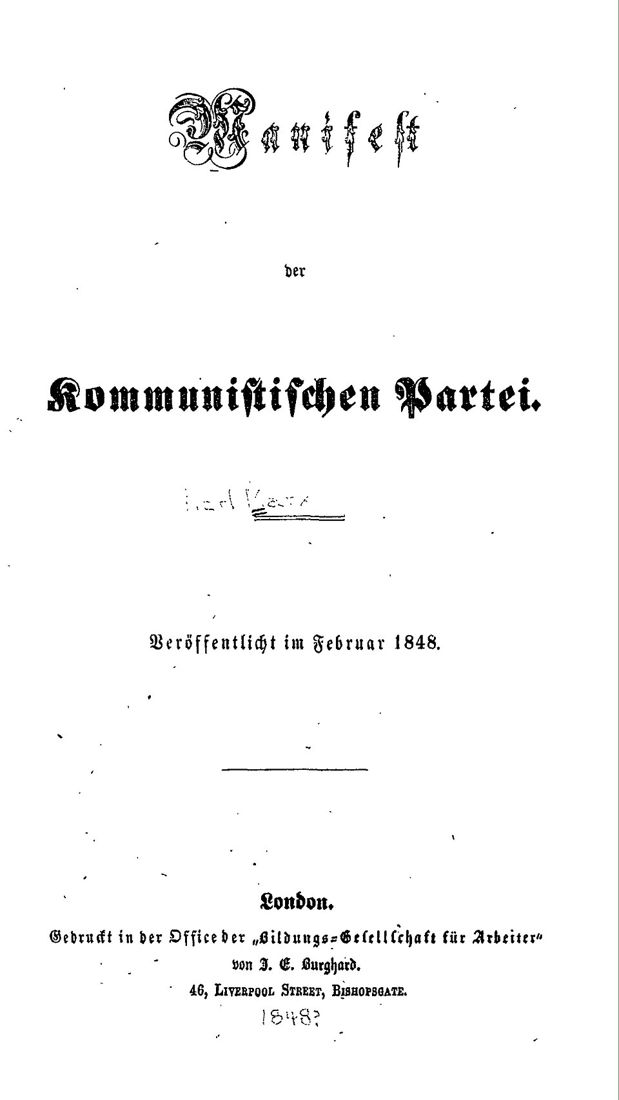
Karl Marx and Friedrich Engels, Manifesto of the Communist Party, Chapter 1
"Society as a whole is more and more splitting up into two great hostile camps…"
The two camps are the bourgeoisie (the owners) and the proletariat (the workers).
Read Chapter 1 (Marxists Internet Archive) →Program of the National Socialist German Workers' Party (the Nazi Party), the "25 Points"
Point 4 says that only a person of German "blood" can be a citizen, and it names Jews as excluded.
Read the program (German History in Documents and Images) →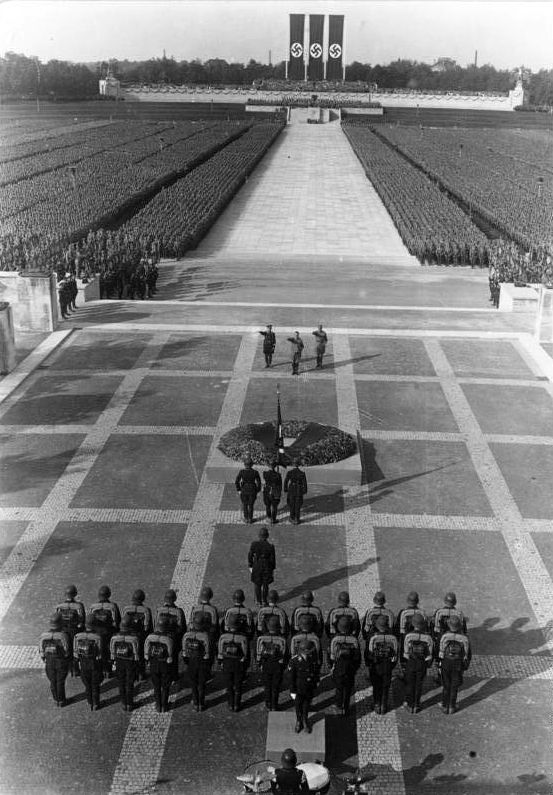
Why this document is here. We read it to see how propaganda names an enemy. After 1933, the Nazi government turned this idea into law. Jews lost their rights, and then six million were murdered in the Holocaust.