Classic English The People and the Enemy

Link 3 · 1983

Laibach

A band that copied the rituals of power so seriously that the government banned its name.

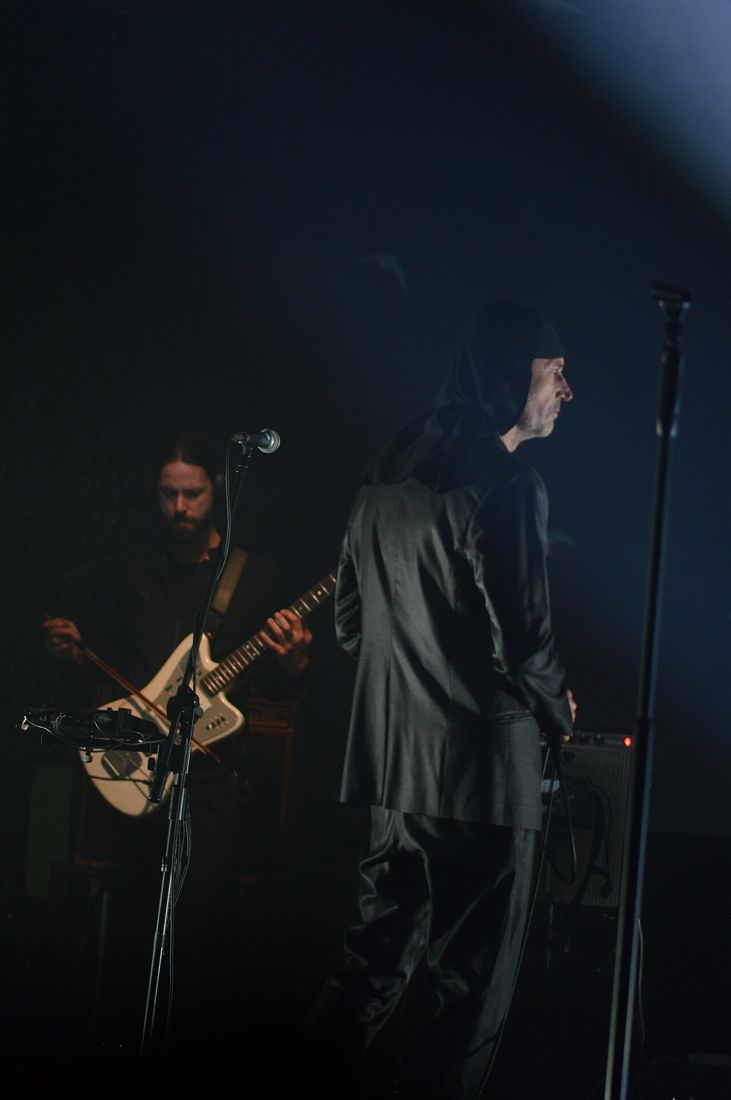
Laibach's singer, dressed in black, and a guitarist on a dark, blue-lit stage
Laibach in concert, Gdańsk, Poland, 2 November 2022 · Wojciech Pędzich, CC BY 4.0
  1. 2015–2017Modern populism
  2. 2011Occupy Wall Street
  3. 1983Laibach
  4. 1848 · 1920Communism and National Socialism
  5. 1848–2017Closing the loop

Key idea

Over-identification. Laibach is a band from Slovenia, then part of communist Yugoslavia. They did not make fun of power. They copied it so seriously that power itself became uncomfortable.

Laibach formed in 1980 in Trbovlje, a coal-mining town in Slovenia. The name is the German word for Ljubljana, Slovenia's capital, as it was called under Nazi occupation.

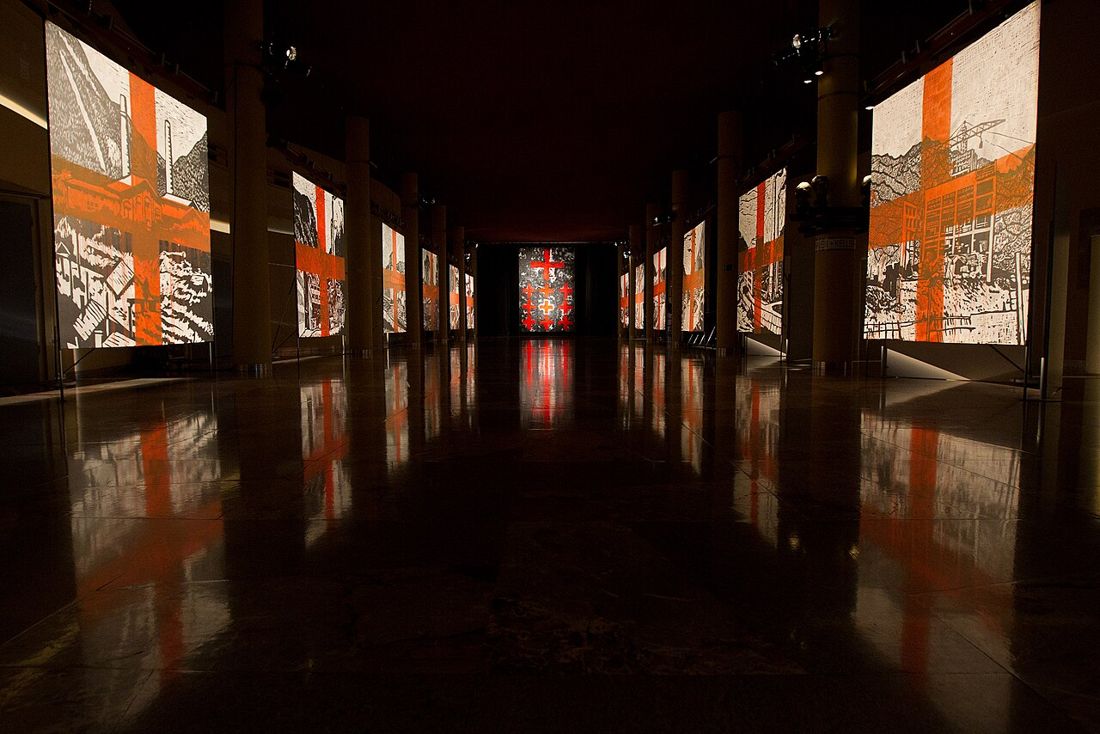
A long, dark hall lined with huge orange screens marked with black crosses, reflected in a polished floor
Red Districts, a Laibach show in its home town, Trbovlje, 2011 · Gruppe LAIBACH, CC BY-SA 3.0

On 23 June 1983, Laibach appeared on Slovenian television in military uniforms and sat almost without moving. After the programme, the government banned them from using their name. The ban lasted until 1987.

Laibach's first TV interview

TV Tednik (TV Weekly), Slovenian television, 23 June 1983 · English translation

"Happiness lies in total negation of one's identity…"

The host called the band "enemies of the people" and asked citizens to stop them.

Read about the interview (official Laibach timeline) →

Laibach's answer to the question "Are you fascists?"

Early 1980s

"We are fascists as much as Hitler was a painter."

As a young man, Hitler tried to become a painter and failed.

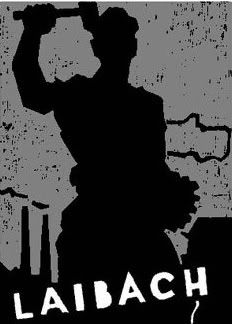
A black-and-white woodcut of a man in silhouette raising a hammer, factory chimneys behind him, with the word LAIBACH below
“The Thrower”, a Laibach woodcut, 1983. Is it a worker's protest, or a poster for the state? · Gruppe LAIBACH, CC BY-SA 3.0
Clip: Laibach, “Geburt einer Nation” (“Birth of a Nation”), music video, 1987 (YouTube) Clip: Laibach on TV Tednik, 1983, uncut, part 2, in Slovene (YouTube)

Three ways to live under a system you do not believe in

Believe it

You take the official words as true. The true believer.

Laugh at it, and obey

You make jokes in private, roll your eyes, and still do what you are told. The cynic.

Take it more seriously than the rulers do

You perform the rituals with total sincerity, so their hidden side shows. Laibach.

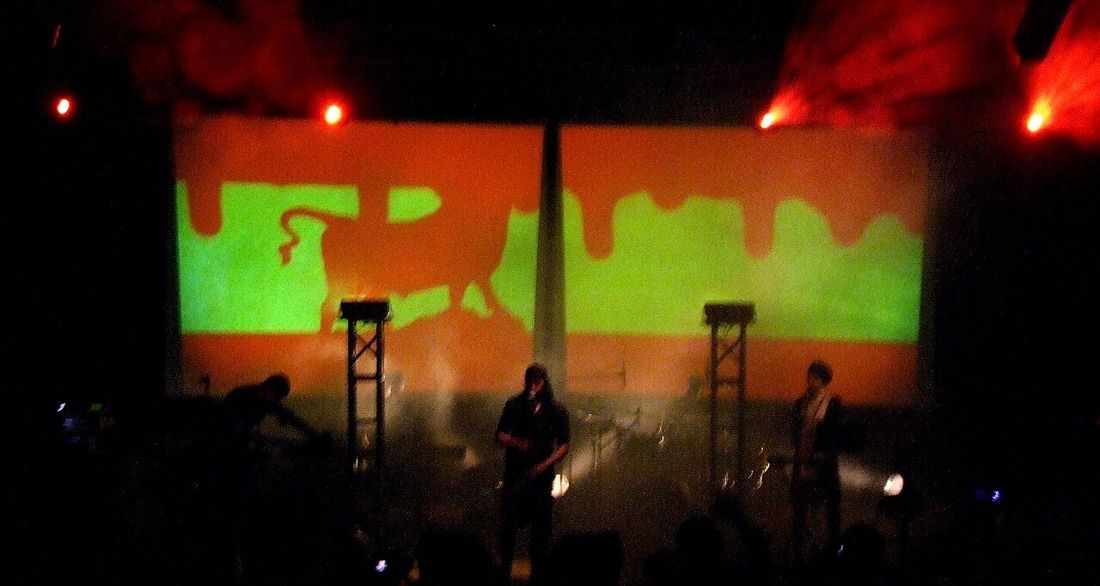
The band in silhouette in front of a huge orange and green screen, under red stage lights
Laibach in concert, Celje, Slovenia, 2007 · Ines Zgonc, CC BY-SA 3.0

Most people in Yugoslavia lived in the middle box. Žižek's surprising claim is that the middle box was not a problem for the government. It was what the government needed.

A story Žižek tells: the election headline

Everyone in Yugoslavia knew elections were not free: the Communist Party always won. But there was an unwritten rule that nobody said so in public.

In the early 1980s, a student weekly newspaper decided to protest. It did not call the elections fake. Instead, Žižek writes, the editors decided "to treat them as if they are really free, as if their result really was undecided." On the night before the election, they printed an extra edition with a large headline:

"Latest election results: it looks that Communists will remain in power!"

"This simple intervention broke the unwritten 'habit' (we 'all know' that elections are not free, we just do not talk publicly about it…)"

In a lecture, Žižek adds what happened next. The students were called into the Dean's office. They played dumb: what was wrong with reporting the result? The Dean could not say what was wrong without admitting the election was fake. Finally he dropped the act and told them: "Cut the crap. You know what you did."

What did they all know? That the election was not real, and that everyone had to act as if it were, without believing it. The students had done nothing except take the official story literally, and that was the crime. Someone who truly believed the official story would also be a problem.

Source: Slavoj Žižek, "Tolerance as an Ideological Category"

Why not just "speak truth to power"?

Žižek, quoting the writer Moustapha Safouan, in the same essay

"…power will not listen and that the people already know the truth as they make clear in their jokes."

Everyone already knew the elections were fake, and the government did not care what people said in private. So the students did not shout the truth. They made the official lie impossible to ignore.

The poster that fooled Yugoslavia, 1987

Every year on 25 May, Yugoslavia celebrated Youth Day, the official birthday of its leader Tito. A national competition chose the poster.

In 1987, the design group of NSK, the art movement Laibach belongs to, sent in a poster of a strong young man with a Yugoslav flag, a red star and a dove. The government commissions chose it as the best design.

Then a newspaper revealed the source. The poster copied a Nazi painting, The Third Reich by Richard Klein (1937). The artists had only swapped the Nazi symbols for Yugoslav ones: the swastika flag became a Yugoslav flag with a star. The commissions had not noticed.

It became a national scandal. The Relay of Youth, the run that carried a baton across the country to Tito's birthday, was held only once more, in 1988.

Behind the poster for the Day of Youth (House of European History) →

Žižek's essay: "Why Are Laibach and NSK Not Fascists?"

Slavoj Žižek, 1993 · NSK (Neue Slowenische Kunst) is the art group Laibach belongs to

1. Two kinds of law

Žižek says every community has two sets of rules. One is the written law that everyone can read. The other is an unwritten code that holds the group together, which nobody admits in public.

His example is the film A Few Good Men (1992). In it, soldiers follow a secret order called "Code Red": a night-time beating of a soldier who has broken the group's code. It is against the law, but the group expects it. Everyone knows about it, and nobody speaks about it. Žižek's darker examples are the Ku Klux Klan in the American South and the Nazi community, where people shared guilt for what, in his words, "everybody knew, yet did not want to speak about aloud."

2. Laughing at power is not resisting it

Many people who liked Laibach assumed the band was being ironic, making fun of dictators. But they also worried: what if Laibach really meant it?

Žižek turns the question around. What if private jokes and eye-rolling are exactly what the system needs? People who laugh in private but obey in public cause no trouble. For Žižek, that cynical distance is the most common way to conform.

3. Over-identification

Laibach, Žižek writes, troubles the system because its act is "not its ironic imitation, but over-identification with it." By performing the ideology with total seriousness, uniforms, marches and all, Laibach puts the hidden, unwritten side of power on public display. Then it stops working.

His comparison: every family or group of friends has private nicknames or little rituals. If someone says them out loud in public, everyone is embarrassed. Laibach did that to the state.

4. A question, not an answer

"Laibach itself does not function as an answer but a question."
Clip: Slavoj Žižek on Hitler and Fascism (Žižek and So On podcast, YouTube)

Audiences kept asking Laibach: are you really totalitarians or not? Laibach never answered. So the question came back to the audience: what do you believe, and why do you need someone else to tell you?

More on Laibach's message (OpenLearn) →

Questions

"Laibach" is the German name for Ljubljana, the name used when the Nazis occupied the city. The band mixed Nazi and communist images. Why would a Slovenian band in 1983 use both?